If you run a small business in India, chances are you've heard that "you need SEO" more times than anyone has actually explained what that means for a business like yours. This guide breaks SEO down into the parts that genuinely matter for a small or growing business, without the jargon.
What SEO actually is
SEO, or search engine optimisation, is the practice of making your website easier for search engines like Google to understand, and more relevant to the searches your potential customers are making. It isn't a single action, it's a combination of technical fixes, content decisions and ongoing consistency.
For a small business, SEO usually matters most for one simple reason: people search for the products and services they need before they buy them. If your business doesn't show up in those searches, you're relying entirely on other channels, referrals, ads, or word of mouth, to bring in customers.
Start with search intent, not just keywords
Many small business owners approach SEO by picking a handful of broad keywords, like "digital marketing agency", and trying to rank for them. In competitive categories, this rarely works quickly, if at all. A more realistic starting point is to think about the specific questions and problems your customers search for.
A bakery in Pune, for example, is far more likely to get meaningful traffic from "eggless birthday cake delivery Pune" than from "cakes." The second term is broad and dominated by large, established sites. The first reflects genuine buying intent and is realistic to compete for.
Local search intent matters for most small businesses
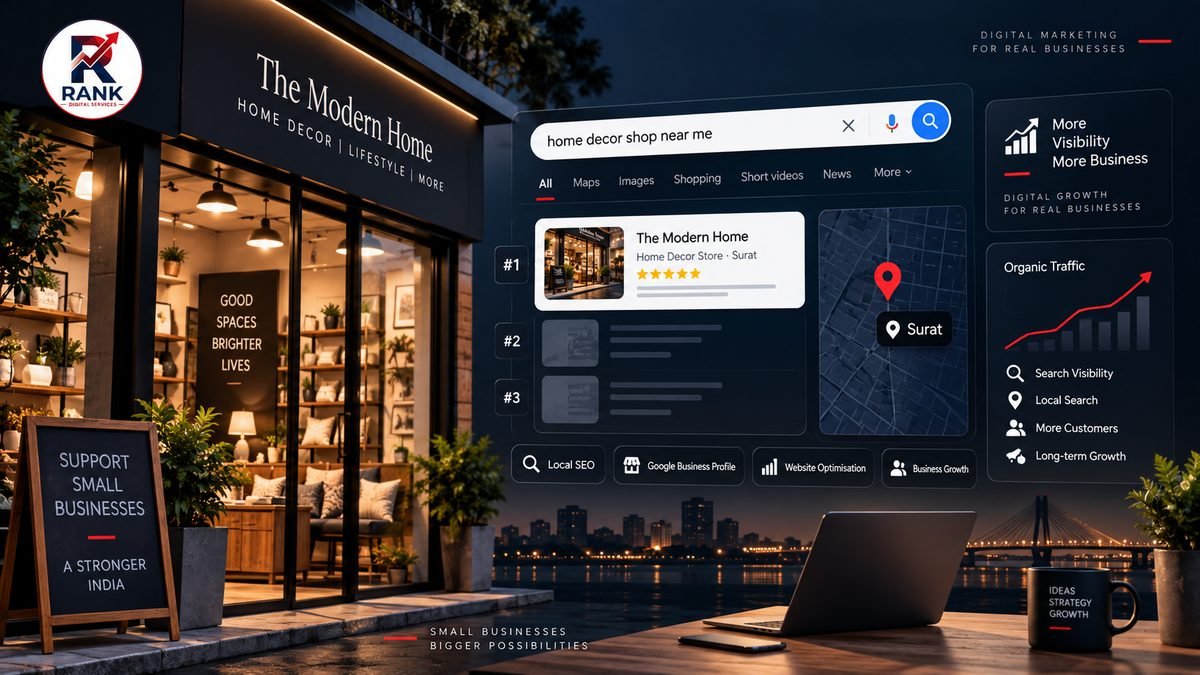
If you serve customers in a specific city or region, a clinic, a salon, a contractor, a local shop, local search intent should be a priority. That means optimising for searches that include your location, keeping your Google Business Profile accurate and complete, and making sure your website clearly states where you operate.
The technical basics that are easy to overlook
Before thinking about content or keywords, it's worth checking that your website doesn't have technical issues getting in the way. Some common ones for small business websites:
- Slow load times, especially on mobile, a large percentage of Indian users will browse your site on a phone, often on a moderate connection.
- Missing or duplicate page titles and meta descriptions, which affect how your pages appear in search results.
- Broken links or missing pages, which waste the crawl budget search engines give your site and frustrate visitors.
- No clear heading structure (a single H1 per page, followed by a logical H2/H3 hierarchy), which helps both users and search engines understand your content.
These issues are common on older or template-based websites, and fixing them is often the single highest-value first step before investing time in new content.
Content that actually answers questions
Once the technical foundation is sound, content is what gives search engines (and visitors) a reason to find your site relevant. This doesn't mean publishing generic blog posts for the sake of it, it means addressing the real questions your customers have before, during and after a purchase decision.
For example, a website development business might publish content answering "how much does a business website cost in India" or "how long does it take to build a website", genuine questions a prospective customer is likely to search.
Internal linking ties it together
Internal links, links from one page on your site to another, help search engines understand which pages are most important, and help visitors find related information. A blog post about a topic should link to the relevant service page, and service pages should link to each other where genuinely related.
Be realistic about timelines
SEO is not instant. Depending on your industry, competition and the current state of your website, it typically takes several months of consistent work before you see meaningful movement in rankings and traffic. Be cautious of anyone promising fast, guaranteed results, that's usually a sign of shortcuts that can put your site at risk of a search engine penalty later.
The businesses that see the best long-term SEO results are usually the ones that treat it as a consistent, ongoing part of running the business, not a one-time project.
A simple starting checklist
- Confirm your website loads quickly and works properly on mobile.
- Make sure every important page has a unique title and meta description.
- Claim and complete your Google Business Profile if you serve local customers.
- Identify five to ten realistic, specific search terms your customers are likely to use.
- Build or improve content around those terms, answering the underlying question clearly.
- Link related pages on your site to each other with descriptive anchor text.